0
0
 0
0
SANJANA (22SMCS1010120)
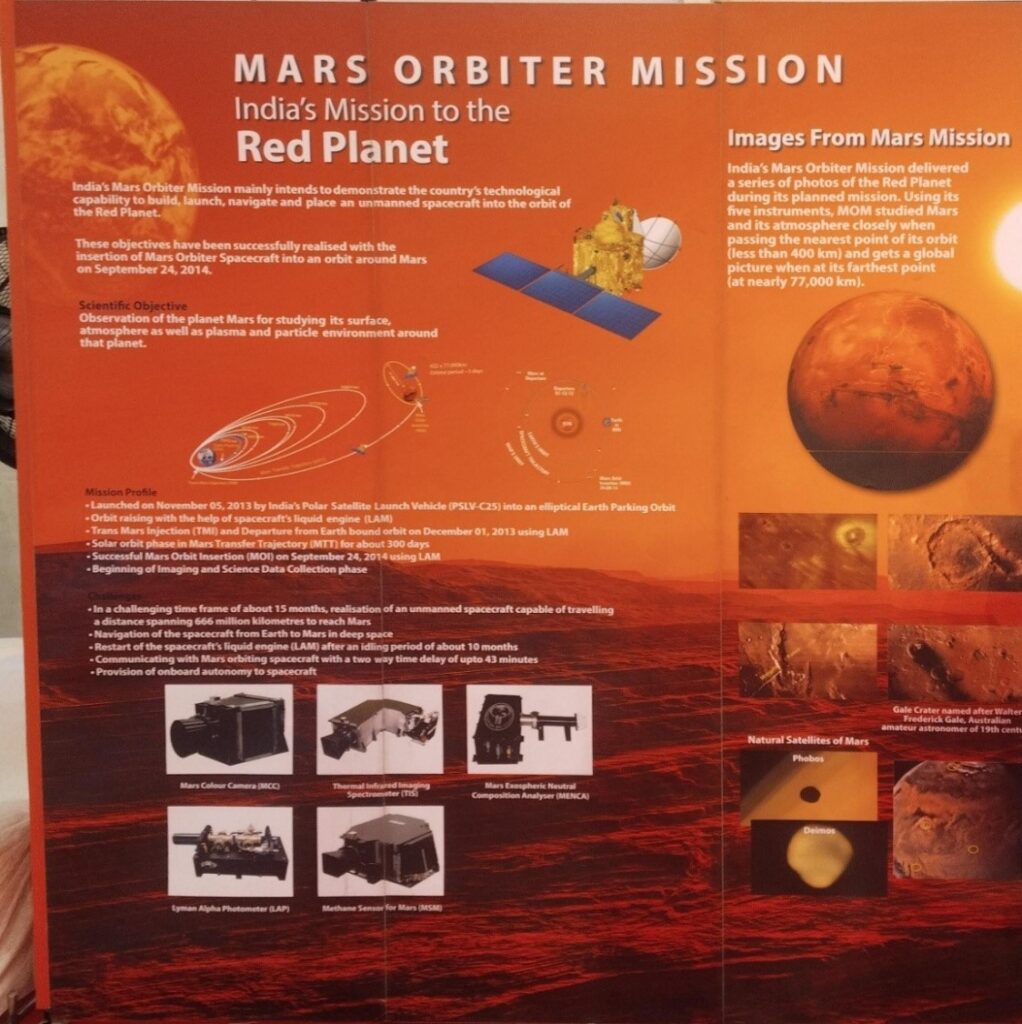
I recently had the amazing opportunity to visit the Vikram Sarabhai Space Exhibition at Galgotias University. This event was a thrilling experience for anyone interested in space and the remarkable work done by the Indian Space Research Organisation (ISRO). The exhibition featured numerous stalls, each highlighting different space missions and projects undertaken by ISRO. One of the most fascinating stalls was dedicated to the Mars Orbiter Mission.
At the Mars Orbiter Mission stall, I spoke with a guide who provided an in-depth explanation of this significant mission. The Mars Orbiter Mission, also known as Mangalyaan, is India’s first mission to another planet. Launched on November 5, 2013, it successfully entered Mars’ orbit on September 24, 2014. This mission marked a historic achievement, making India the first country to reach Mars on its first attempt, a feat that fills every Indian with pride.
The stall featured a detailed model of the Mars Orbiter, which was truly awe-inspiring to see. The guide explained that the spacecraft was designed to study Mars’ surface and atmosphere, demonstrating India’s capability to design, plan, and execute a complex interplanetary mission. The Mars Orbiter is equipped with several scientific instruments to collect valuable data from Mars.
One of the highlights of the exhibit was learning about the cameras on the Mars Orbiter. The guide showed me a model of the Mars Color Camera (MCC), a crucial instrument aboard the spacecraft. The MCC captures stunning images of Mars’ surface, including its craters, valleys, and dust storms. These images are vital for scientists to understand more about the Martian landscape and weather patterns.
Visiting the Mars Orbiter Mission stall was not only educational but also incredibly inspiring. It underscored the importance of space exploration and the relentless quest for knowledge. Seeing the models and understanding the mission’s objectives made me appreciate the hard work and dedication of the scientists and engineers involved.
I also took the opportunity to ask other visitors about their favorite parts of the Vikram Sarabhai Space Exhibition. Manjeet Yadav, a BSc Agriculture student, shared his excitement: “I really enjoyed seeing the model of the Mars Orbiter. The guide explained everything so well, and I felt proud that India reached Mars on the first try.” Mukesh Kumar Singh, another BSc Agriculture student, added, “Learning about the different scientific tools on the Mars Orbiter was very interesting. The exhibition showed how much hard work and creativity ISRO puts into their missions.”
In conclusion, the Vikram Sarabhai Space Exhibition at Galgotias University was an extraordinary experience that showcased India’s advancements in space technology. The Mars Orbiter Mission stall, in particular, stood out, highlighting India’s scientific prowess and ambition. It served as a reminder that with determination and innovation, even the sky is not the limit.