0
0
 0
0
Keya Gupta *BJMC 3rd SEM
The 22nd of January holds immense significance in the hearts of millions of Indians as it marks the auspicious day when the foundation stone for the Ram Mandir in Ayodhya was laid. This momentous event is not just a religious milestone but a cultural and historical testament to the enduring legacy of Lord Ram and the city of Ayodhya.
Ayodhya: The Sacred City of Lord Ram
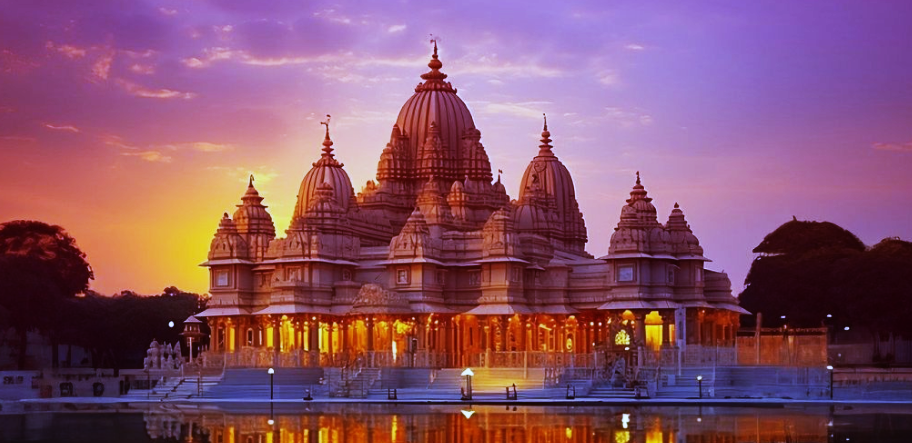
Ayodhya, often referred to as the birthplace of Lord Ram, holds a special place in Indian mythology and history. The ancient city is mentioned in the Hindu epic, Ramayana, where it is depicted as the capital of the legendary king Dasharatha, the father of Lord Ram. Ayodhya is believed to be the sacred ground where Lord Ram, the seventh incarnation of Lord Vishnu, was born.
Over the centuries, Ayodhya has been a symbol of cultural and spiritual heritage, drawing pilgrims and devotees from across the country. However, the city also became a focal point of controversy and communal tensions due to the historical Babri Masjid-Ram Janmabhoomi dispute.
Babri Masjid-Ram Janmabhoomi Dispute: A Long Struggle
The dispute revolved around a mosque, the Babri Masjid, built by Mughal Emperor Babur in the 16th century on what many Hindus believe to be the birthplace of Lord Ram. The controversy over the site led to a protracted legal battle and, tragically, resulted in the demolition of the Babri Masjid on December 6, 1992.
The demolition of the mosque led to widespread communal tensions, and the Ram Janmabhoomi-Babri Masjid dispute became one of the most contentious issues in Indian politics. After years of legal proceedings, the Supreme Court of India, in a landmark judgment in November 2019, granted the disputed site in Ayodhya to Hindus for the construction of the Ram Mandir, while also allocating an alternative plot for the construction of a mosque.
22nd January: A Symbol of Reconciliation and Unity
The inauguration of the Ram Mandir on 22nd January marks the beginning of the construction of the grand temple dedicated to Lord Ram. This day is not only a religious celebration but also a moment of unity, signifying the resolution of a long-standing dispute through legal means. It is a testament to India’s commitment to its secular ideals while respecting the cultural and religious sentiments of its diverse population.
The Ram Mandir is expected to become a symbol of national integration, fostering harmony among communities. The temple’s construction aligns with the vision of a “New India” where the shared cultural heritage is celebrated, and differences are embraced as a source of strength.
The construction of the Ram Mandir is not just a religious event; it is a reflection of the enduring cultural and historical roots that bind the people of India. Lord Ram, an embodiment of virtue and righteousness, is revered across the country, transcending religious boundaries.
The temple’s architecture is planned to be a marvel, blending traditional design with modern technology. The construction project is expected to become a national endeavour, attracting artisans, architects, and devotees from various parts of the country.
In conclusion, the inauguration of the Ram Mandir on 22nd January is a momentous occasion that reverberates beyond religious boundaries. It is a step towards healing the historical wounds, fostering national unity, and celebrating India’s rich cultural tapestry. The event not only marks the construction of a grand temple but also symbolizes the resilience of the Indian spirit and its commitment to harmonious coexistence.